What it does
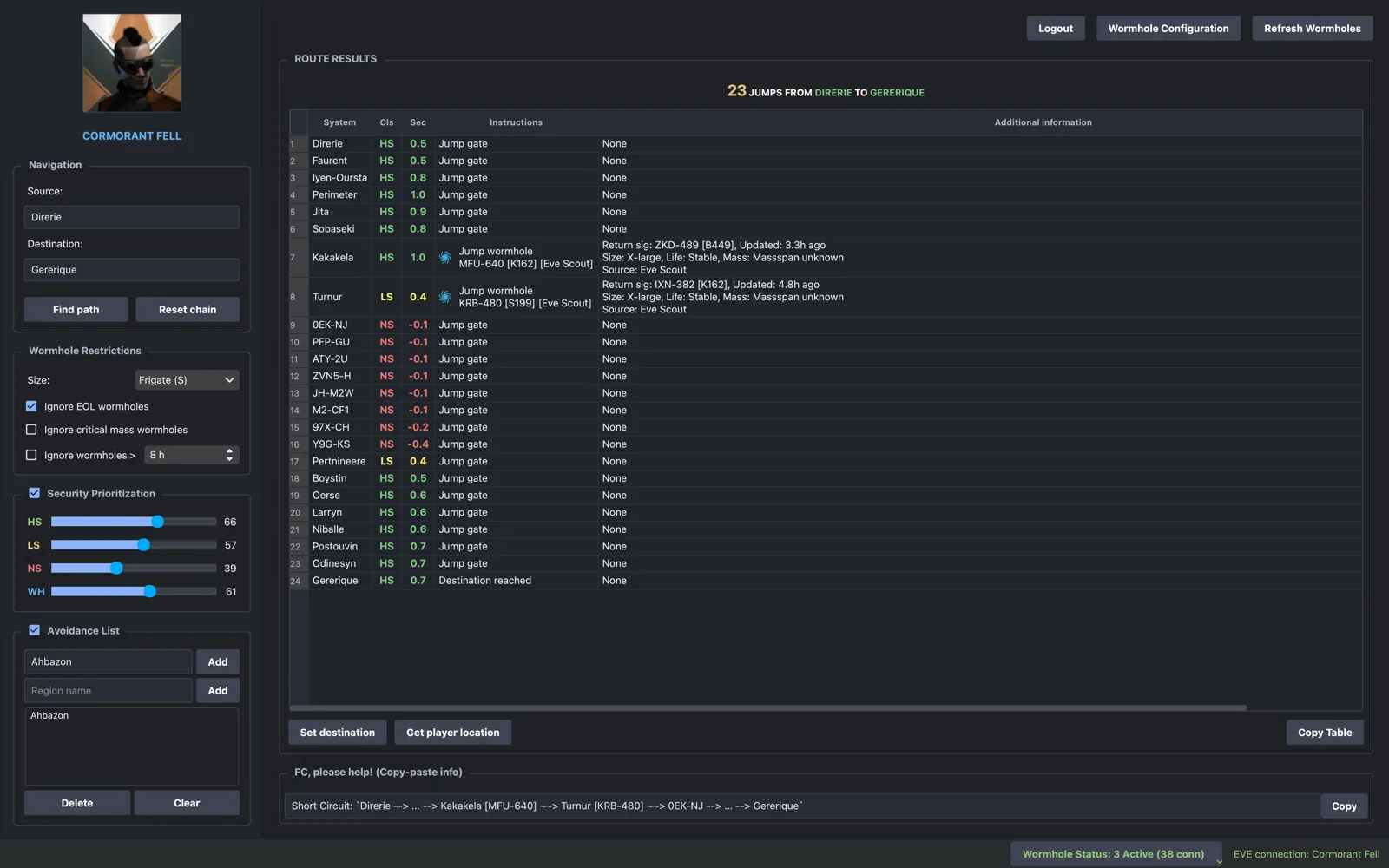
It routes through holes as well as gates. The engine builds a transient graph from live connection data and computes the shortest path across high, low, null and wormhole space together, respecting your avoidance list and the size restrictions of each hole without once asking your reasons. Two systems that are thirty jumps apart by gate are frequently four by chain, and this is the instrument that notices.
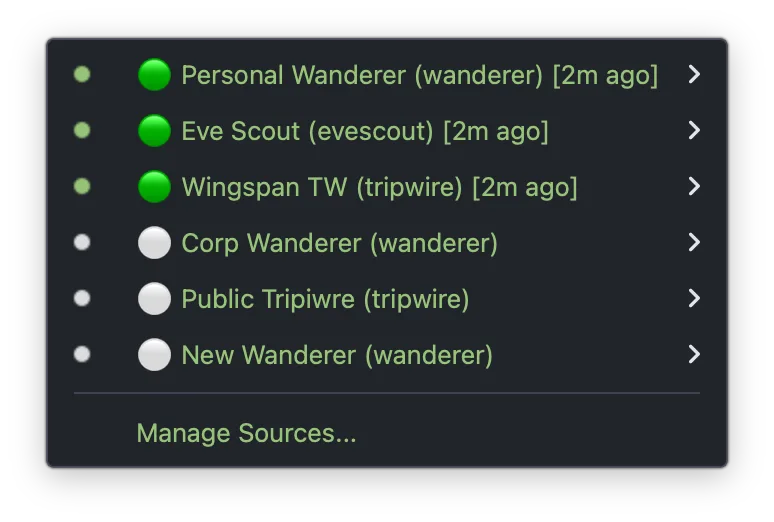
It reads several maps at once. Eve-Scout for Thera and Turnur, your corporation's Tripwire, your own Wanderer map — several accounts of the same provider included, because sometimes you have trust issues and that is fine. Everything is funnelled into one connection database that handles deduplication, conflict resolution and freshness. When two sources disagree about a hole, and they will, the more recent record wins. This is as close to wisdom as software gets.
It has opinions, and they are adjustable. Filter by ship size, exclude end-of-life holes, exclude holes at critical mass, ignore anything older than a stated age. Four sliders express your feelings about each class of space: set null to the maximum and the router will thread you through three consecutive wormholes before it will glance at a null gate.
It hands the answer to the fleet. One click copies the route as clean fleet-chat text, or as a full instruction table with jump-by-jump directions, signature identifiers and wormhole status. Efficient, professional, and deeply unlikely to save anyone from a smartbomb.
Collect it
Provenance. This is Cormorant Fell's edition, and a personal project: if you want the stable, maintained article, secondfry's Short Circuit is the one with adults in charge.